Featured
Table of Contents
Handling Interest Costs in Debt Consolidation Near During 2026
The financial environment of 2026 presents particular difficulties for homes attempting to stabilize month-to-month spending plans versus relentless interest rates. While inflation has actually stabilized in some sectors, the cost of carrying consumer financial obligation remains a considerable drain on individual wealth. Lots of residents in Debt Consolidation Near discover that traditional techniques of financial obligation payment are no longer sufficient to stay up to date with compounding interest. Effectively navigating this year requires a strategic focus on the overall expense of borrowing rather than simply the monthly payment amount.
One of the most frequent mistakes made by customers is relying entirely on minimum payments. In 2026, credit card rates of interest have actually reached levels where a minimum payment barely covers the month-to-month interest accrual, leaving the primary balance essentially untouched. This creates a cycle where the financial obligation persists for years. Shifting the focus toward lowering the annual percentage rate (APR) is the most effective method to reduce the payment duration. People looking for Debt Consolidation often find that debt management programs supply the essential structure to break this cycle by negotiating straight with financial institutions for lower rates.
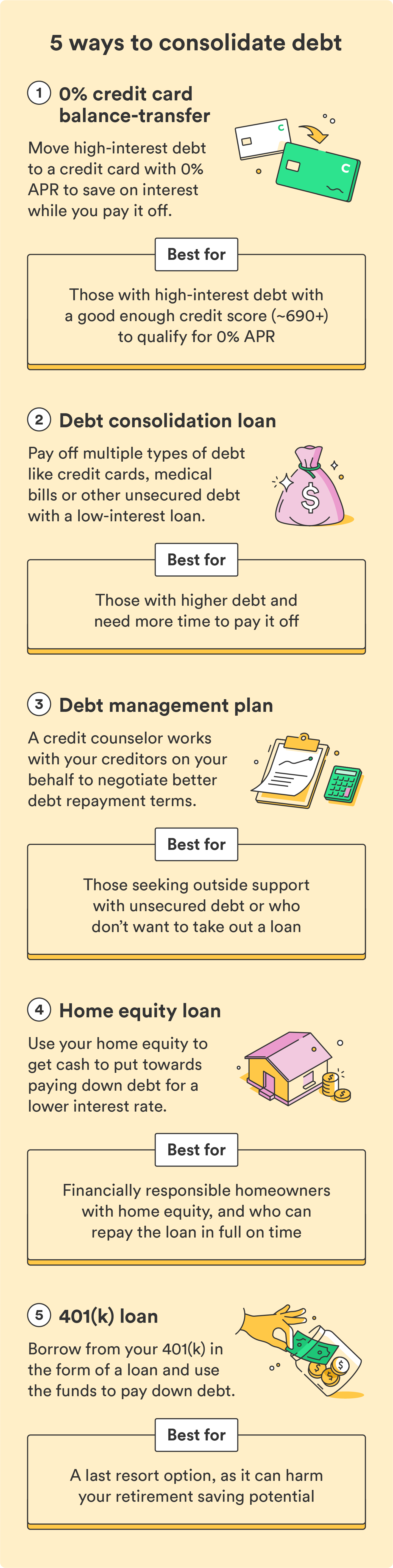
The Danger of High-Interest Debt Consolidation Loans in the Regional Market
As financial obligation levels rise, 2026 has actually seen a rise in predatory lending masquerading as relief. High-interest debt consolidation loans are a typical risk. These products assure a single month-to-month payment, however the hidden rate of interest might be greater than the average rate of the original financial obligations. If a customer uses a loan to pay off credit cards but does not deal with the underlying spending practices, they typically end up with a big loan balance plus brand-new credit card financial obligation within a year.
Not-for-profit credit counseling uses a different path. Organizations like APFSC provide a financial obligation management program that combines payments without the requirement for a brand-new high-interest loan. By resolving a 501(c)(3) nonprofit, people can benefit from developed relationships with national lenders. These collaborations enable the firm to work out considerable rate of interest decreases. Local Debt Consolidation Programs offers a course towards financial stability by making sure every dollar paid goes even more towards reducing the actual financial obligation balance.
Geographic Resources and Neighborhood Assistance in the United States
Financial recovery is frequently more successful when localized resources are involved. In 2026, the network of independent affiliates and neighborhood groups across various states has actually ended up being a cornerstone for education. These groups offer more than simply debt relief; they provide monetary literacy that helps prevent future debt build-up. Since APFSC is a Department of Justice-approved agency, the counseling offered satisfies strict federal standards for quality and transparency.
Housing remains another significant consider the 2026 financial obligation formula. High home mortgage rates and rising leas in Debt Consolidation Near have actually pushed numerous to use charge card for standard needs. Accessing HUD-approved housing therapy through a nonprofit can assist homeowners handle their real estate expenses while concurrently dealing with consumer debt. Families often try to find Debt Consolidation in Durham to acquire a clearer understanding of how their lease or home mortgage communicates with their overall debt-to-income ratio.
Preventing Common Errors in 2026 Credit Management
Another mistake to prevent this year is the temptation to stop interacting with creditors. When payments are missed, interest rates frequently surge to charge levels, which can go beyond 30 percent in 2026. This makes a currently challenging situation almost impossible. Professional credit counseling serves as an intermediary, opening lines of communication that a specific might find challenging. This procedure assists secure credit rating from the extreme damage brought on by total default or late payments.
Education is the finest defense against the rising costs of financial obligation. The following techniques are necessary for 2026:
- Reviewing all charge card statements to determine the current APR on each account.
- Focusing on the repayment of accounts with the greatest interest rates, often called the avalanche technique.
- Seeking not-for-profit assistance rather than for-profit debt settlement companies that might charge high costs.
- Using pre-bankruptcy therapy as a diagnostic tool even if personal bankruptcy is not the designated goal.
Nonprofit companies are required to act in the very best interest of the customer. This consists of providing free initial credit counseling sessions where a qualified therapist reviews the individual's whole financial image. In Debt Consolidation Near, these sessions are typically the first step in determining whether a financial obligation management program or a various monetary technique is the most proper option. By 2026, the complexity of monetary products has actually made this professional oversight more essential than ever.
Long-Term Stability Through Financial Literacy
Decreasing the total interest paid is not practically the numbers on a screen; it has to do with reclaiming future earnings. Every dollar saved money on interest in 2026 is a dollar that can be redirected towards emergency cost savings or pension. The financial obligation management programs supplied by firms like APFSC are created to be short-lived interventions that lead to permanent changes in financial habits. Through co-branded partner programs and regional monetary institutions, these services reach diverse communities in every corner of the nation.
The goal of managing financial obligation in 2026 must be the overall elimination of high-interest customer liabilities. While the procedure requires discipline and a structured plan, the results are quantifiable. Decreasing rate of interest from 25 percent to under 10 percent through a worked out program can save a family countless dollars over a couple of brief years. Preventing the pitfalls of minimum payments and high-fee loans allows locals in any region to move toward a more protected monetary future without the weight of uncontrollable interest costs.
By focusing on confirmed, nonprofit resources, customers can navigate the economic obstacles of 2026 with self-confidence. Whether through pre-discharge debtor education or basic credit counseling, the objective stays the exact same: a sustainable and debt-free life. Doing something about it early in the year makes sure that interest charges do not continue to compound, making the ultimate goal of financial obligation freedom much easier to reach.

Latest Posts
Understanding the Official Housing Counseling Process in 2026
Ways to Handle Total Insolvency Safely
Choosing Between Settlement and Bankruptcy in 2026